
In the audio industry, spec sheets tell only half the story. As a professional speaker manufacturer based in Guangzhou, we often see buyers getting lost in numbers like “100W Power” or “20Hz-20kHz Frequency Response.” While these parameters are important, they don’t always guarantee a pleasing listening experience.
For B2B buyers, distributors, and audiophiles, the ultimate test of a speaker lies in its sound performance. But how do you objectively evaluate “good sound”? Today, let’s dive into the professional methods of judging speaker quality through critical listening, moving beyond the data to hear the true texture of sound.
1. The Foundation: Tone Quality vs. Timbre
Before diving into complex details, we must distinguish between two core concepts that are often confused: Tone Quality and Timbre.
- Tone Quality (Sound Quality): Think of this as the “build quality” of the sound. Just like a pair of shoes needs to be comfortable and durable, good tone quality means the sound is natural, comfortable, and pleasant to listen to for long periods without fatigue. It is about fidelity—how accurately the speaker reproduces the original recording.
- Timbre (Tone Color): This refers to the “color” of the sound. Is the violin sounding warm and rich, or cold and harsh? A high-quality speaker should present a neutral and accurate timbre, rather than coloring the sound unnaturally.
2. Key Dimensions to Evaluate Sound Texture
When testing a speaker sample, focus on these five professional dimensions to determine its quality tier:
Density and Weight
Have you ever held a kilogram of cotton and a kilogram of iron? They weigh the same, but the iron feels much denser. Sound works similarly.
- High Quality: Instruments and vocals feel solid, tangible, and have a sense of “weight.” A kick drum sounds punchy and扎实 (solid), not hollow.
- Low Quality: The sound feels thin, loose, or floating, lacking physical presence.
Transparency
Transparency describes how clear the sound is. Imagine looking through a clean window versus a foggy one.
- High Quality: The sound is crystal clear, like a gentle, clear stream. You can hear subtle details in the recording, such as the singer’s breath or the friction of fingers on guitar strings.
- Low Quality: The sound feels covered by a layer of “fog” or veil. It might sound muffled or congested, making it hard to distinguish fine details.
Localization and Imaging
This refers to the speaker’s ability to place instruments in a specific space.
- High Quality: You can close your eyes and point exactly to where the vocalist is standing (usually center) and where the guitarist is located (left or right). The image is focused and stable.
- Low Quality: The soundstage is messy. Instruments seem to drift around, or everything blends into one big blob of noise without distinct positioning.
Layering and Separation
In a complex orchestral piece, can you hear individual instruments clearly?
- High Quality: There is excellent separation. Even when the music gets loud and complex, you can distinguish the cello from the double bass. There is “air” and space between instruments.
- Low Quality: Sounds blend together indistinguishably during busy passages. It becomes a wall of noise rather than a structured performance.
️ Dynamic Control (Especially Bass)
Many people mistake “loud bass” for “good bass.” However, control is key.
- High Quality: The bass is tight, elastic, and stops immediately when the note ends. It has impact without being muddy.
- Low Quality: The bass is “boomy” or loose. It lingers too long (overhang), bleeding into other frequencies and muddying the midrange.
3. Why Factory Expertise Matters
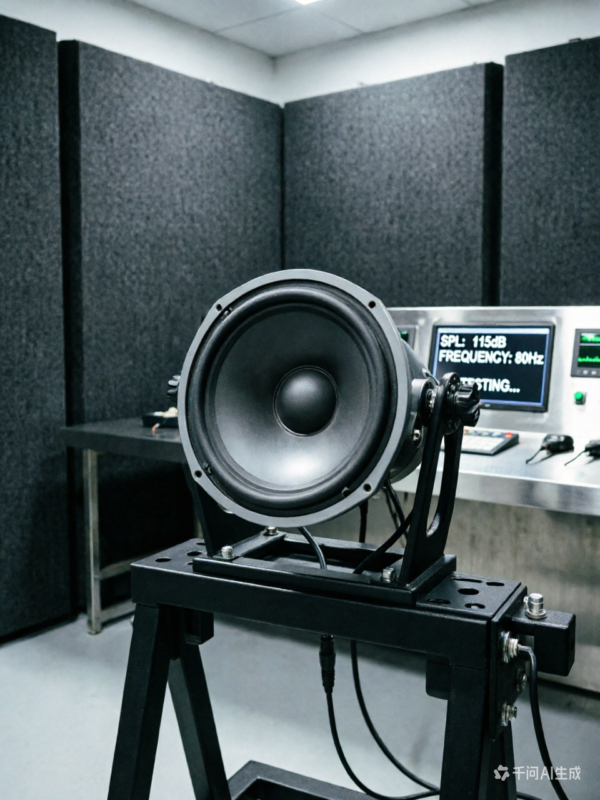
Understanding these nuances requires more than just good ears; it requires engineering precision. At our Guangzhou factory, we don’t just assemble parts. We utilize professional anechoic chambers and strict QC processes to tune our speakers.
We ensure that our products don’t just meet frequency response targets but also deliver the density, transparency, and imaging that discerning buyers look for. Whether you are sourcing portable Bluetooth speakers or high-end Hi-Fi systems, understanding these sound characteristics will help you select products that truly stand out in the market.
Looking for a manufacturing partner who understands both the science and art of sound?
[Contact Us] today to request a sample and experience the difference firsthand.